 Eco Francisco Pest ManagementEco Francisco Pest Management
Find the entry. Seal it. Stay gone.
Eco Francisco is a pest control service San Francisco homeowners, long-term renters and small building managers call at the moment of discovery — droppings under the sink at 11pm, a roach on a shared-wall kitchen counter, scratching overhead in the crawlspace. We run the same sequence every time: inspect, identify the species, find and seal the way in, then treat with the mildest product that will actually finish the job, and tell you in writing what was applied and where. Call (628) 278-5478, or text a photo of the droppings, the insect or the gap you found — we can usually name the pest and the likely entry before a visit is ever booked.
Call (628) 278-5478
Text or call about your pest control service job — a quick photo helps us quote fast.
A firm, all-in price confirmed before we start — no surprises.
On time, done to standard, and tidy when we leave.
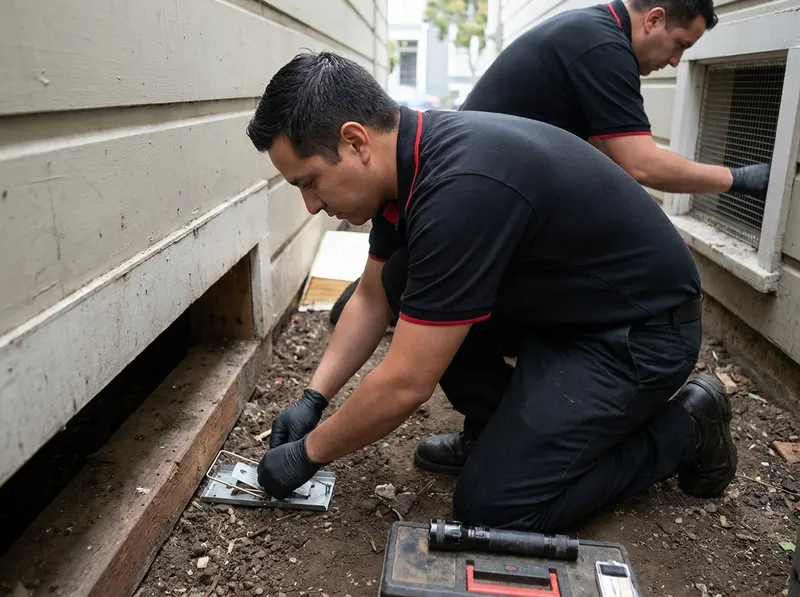
Norway rats and roof rats are the two species that drive most San Francisco rodent calls, and they behave differently: Norway rats work low — sewer laterals, dirt crawlspaces, garage slabs, hillside burrows in Bernal Heights and Potrero Hill — while roof rats travel high along fences, wires, tree limbs and the shared parapets of row houses. We identify which one you have from droppings, rub marks and travel routes, then set snap traps in tamper-resistant stations along those runs rather than scattering bait where a pet or a child could reach it. Trapping is monitored and removed, not left indefinitely. Every rat job includes a written list of the entry points found, because in San Francisco the hole is the problem and the rat is the symptom.
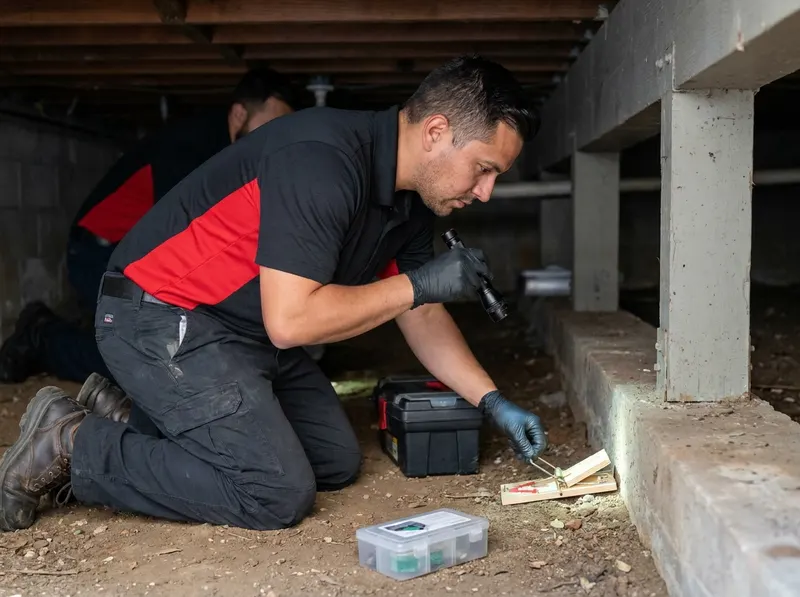
House mice need a gap the width of a pencil, which is why they turn up in San Francisco kitchens with perfectly clean floors — behind the range, under the dishwasher, along the pipe chase to the unit above. Mouse work is detail work: pulling the toe-kick, checking the sink cabinet penetrations, tracing droppings back to the wall void, and sealing pipe collars and gas-line gaps with material a rodent cannot chew through. We use trap grids at close spacing because mice range far less than rats, and we tell you which food-storage and crumb sources are keeping the population fed. In multi-unit buildings we note where the pressure is coming from so the building manager can address the shared source, not just your unit.

Exclusion is the part that makes rodent control permanent, and in San Francisco's older housing stock there is always more to seal than people expect: unscreened foundation vents, sand-worn garage door sweeps in the Outer Sunset, open crawlspace hatches, gaps behind stucco at utility penetrations, uncapped sewer cleanouts, and light-well corners on Edwardian flats. We map every opening, photograph it, and seal with hardware cloth, mortar, copper mesh and metal flashing rather than foam that gets chewed out in a season. Pricing runs $650 to $2,800 depending on how much of the building envelope needs work and how accessible the crawlspace is. Book fall exclusion in September or early October, before the first rains move the whole population indoors and the calendar fills. Exclusion also pays off on ground-floor garages built under living space, which is most of the Sunset and the Richmond.
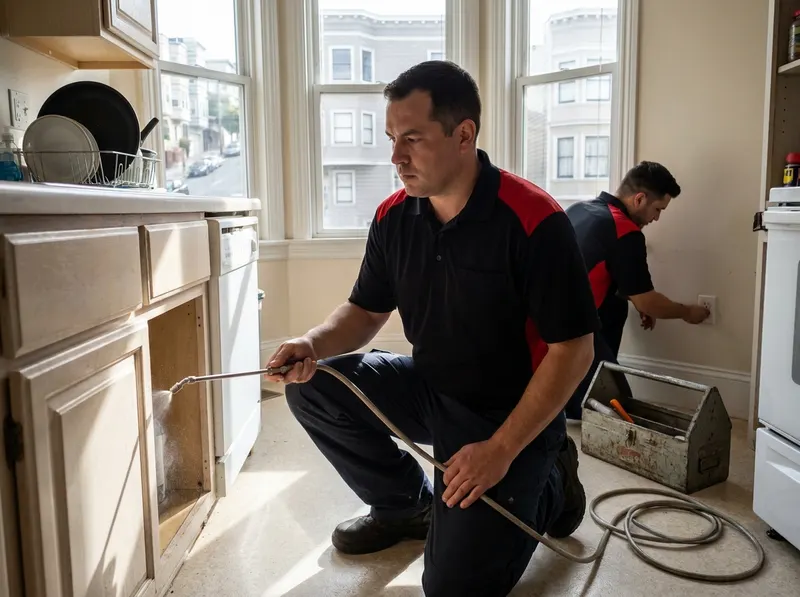
German cockroaches are the hardest pest in San Francisco to hold, not because they resist product but because they live in the walls and cabinet voids you share with the unit next door. A single spray visit knocks down what you can see and leaves the egg cases untouched, which is why we work a two-to-three-visit program at $450 to $900 per unit: targeted gel bait in hinge points, cabinet corners and motor housings, an insect growth regulator to break the breeding cycle, monitors placed to show whether numbers are actually falling, and crack-and-void application instead of open surface spraying near food prep. We also check the obvious re-seeding routes — the shared plumbing chase, the trash room, the gap under a common-wall baseboard — and give the building manager a written note about what needs sealing so your kitchen is not re-infested from a neighbor's.
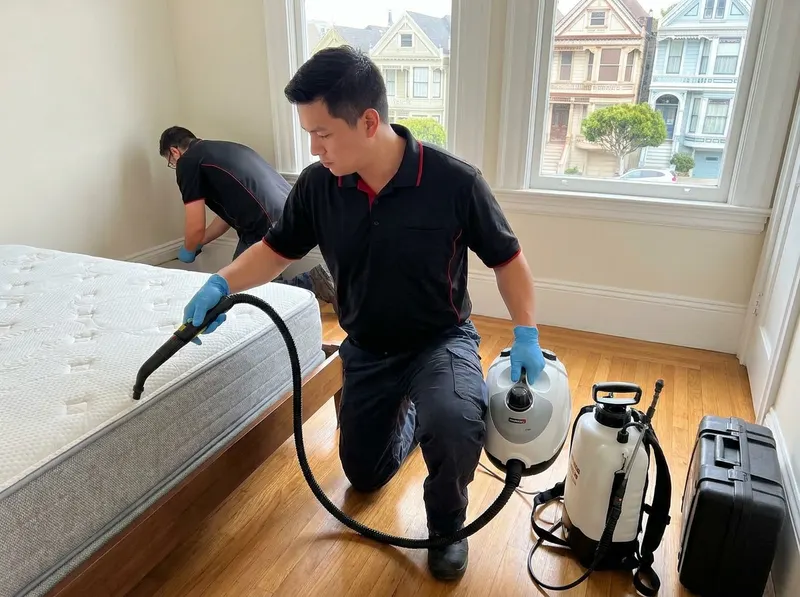
Bed bug work in San Francisco is inspection first, product second. We confirm the ID from live specimens, cast skins or fecal spotting on seams, box spring corners and the back of a headboard — plenty of what people bring us in photos turns out to be carpet beetles or bat bugs, and treating for the wrong insect wastes your money. Conventional treatment runs $400 to $900 per room across two to three visits with mattress encasements and a written prep list; intensive whole-unit heat work runs roughly $1,200 to $3,000 where speed matters more than cost. In flats and small apartment buildings we recommend inspecting the units above, below and beside the one that reported, because bed bugs travel wall voids and outlet boxes, and a single treated unit in a shared-wall building often gets reinfested within a season.
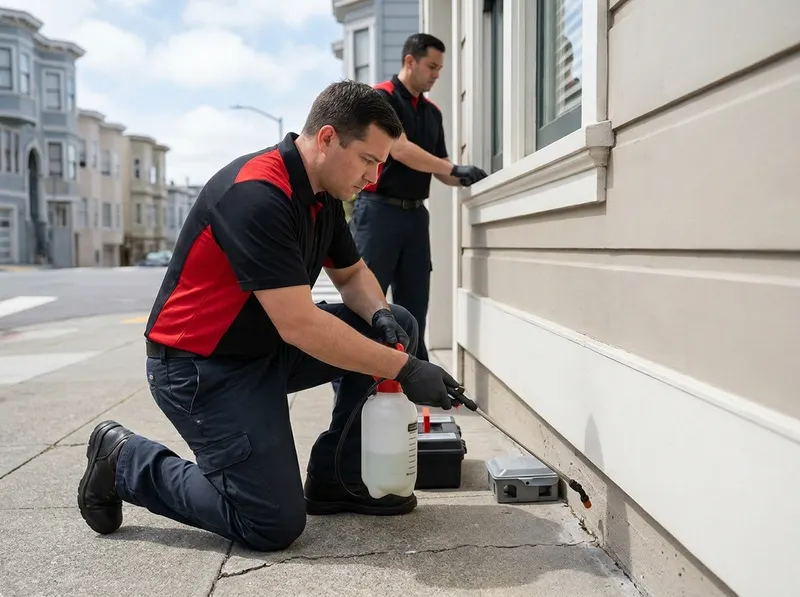
The ants San Francisco actually gets are odorous house ants and Argentine ants trailing indoors along foundation edges, plus carpenter ants in damp exterior wood on the west side and around older decks. Treatment is a trail-follow, not a baseboard spray: we find where the trail enters, bait the workers so the colony carries it back, and treat the exterior perimeter, siding gaps and irrigation-damp soil where the nest actually lives. A one-time interior-and-exterior ant service typically runs $250 to $400. Carpenter ants get a moisture conversation too — they follow water-damaged framing, so if we find soft trim under a leaking window or a bathroom wall, we will tell you plainly that fixing the leak is half the treatment. Spring after the rains, February through May, is the heaviest ant window in the city.
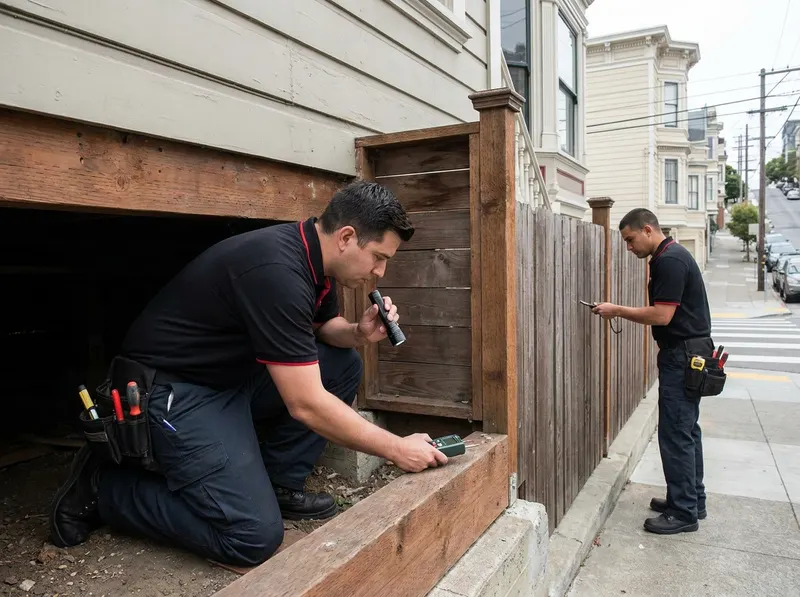
A termite inspection documents what is in the wood and where, and it is the standard first step for a San Francisco home sale, a refinance or an owner who has just seen wings on a windowsill. We check accessible substructure, crawlspace framing, sill plates, porch posts, exterior trim, window sills and garage walls, then issue written findings with photos and a diagram of the affected areas, typically $250 to $450 depending on size and access. Inspections cluster February through May in the city because that is when subterranean swarming and escrow deadlines overlap. If we find nothing structural, we say so — an inspection that always finds a $5,000 problem is a sales tool, not an inspection.
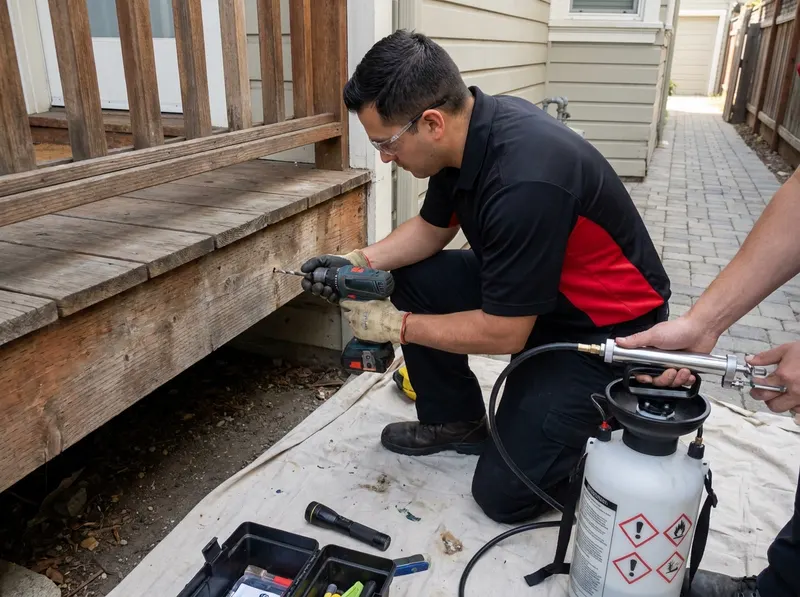
Western drywood termites are the species most San Francisco homeowners notice, usually in late summer and early fall — roughly September through November — when swarmers appear at windows and small pellet piles show up on sills, garage floors and under exterior trim. When galleries are contained to a defined area such as a window frame, a fascia board, a porch beam or a section of garage framing, localized treatment at $650 to $2,200 is the proportionate answer: drill-and-inject the affected members, treat adjacent wood, and re-inspect. You keep living in the house, nothing is tented, and no plants or utilities are disturbed. If a follow-up inspection turns up activity in a second, separated part of the structure, we will tell you honestly that whole-structure work is the better use of your money.
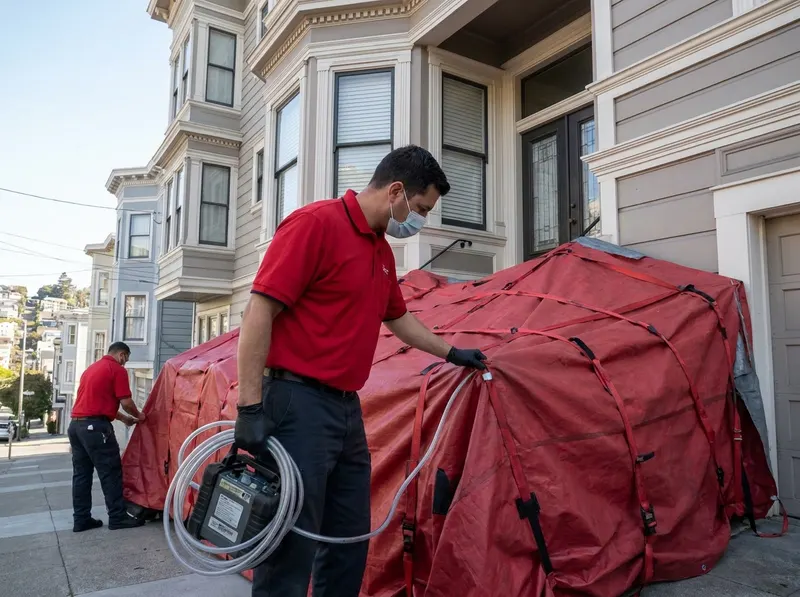
Fumigation is the option for a drywood termite infestation that has spread through multiple separated areas of an older San Francisco structure, where spot treatment would mean chasing colonies you cannot see. It is the longest-lead job we schedule — plan on one to three weeks ahead for occupant notice, utility shutoff, food and medication bagging, plant protection, and coordination with neighbors on attached row houses, which is nearly every block in the Mission District, North Beach and Noe Valley. In this market, tenting generally runs $2,500 to $8,000 or more depending on cubic footage, roof complexity and access. We will only recommend it when the inspection findings justify it, and we will show you the photos and the diagram that led to the recommendation.
Most San Francisco pest problems come down to four honest choices, and the right one depends on your building, not on how alarmed you feel at midnight. If you only need to know what you have and where it is getting in — a landlord asking for documentation, a buyer in escrow, a new noise in the crawlspace — choose the inspection with written findings and photos, starting at the $250 on-site minimum. If you have a confirmed single-species problem in a detached home with no shared walls, such as ants along a kitchen slab in Glen Park or spiders in an Outer Sunset garage, a one-time interior-and-exterior treatment at $250 to $425 usually does it. If you are in a Victorian or Edwardian flat with shared walls, a light well and a neighboring kitchen you do not control — the classic Mission District, North Beach or Inner Richmond setup — a two-to-three-visit program at $450 to $900 per unit is the only thing that holds, because German cockroaches re-seed from next door between visits and one application never breaks the egg cycle. If you want the problem to stay solved rather than be re-treated, choose exclusion: $650 to $2,800 of sealing at foundation vents, garage door sweeps, utility penetrations and crawlspace hatches. <strong>The trade-off is simple — spraying is cheap and fast but temporary, sealing costs more up front and permanently removes the route in.</strong> Rodents split along the same line. If you have one mouse behind the range in a Noe Valley kitchen, a trap grid and two hours of sealing at the sink and gas-line penetrations is proportionate. If you hear running in the ceiling of a Bernal Heights in-law unit and find rub marks along a joist, you are dealing with an established rat route and a one-visit trap set will only quiet it down; the honest recommendation there is trapping plus envelope work on the crawlspace and garage. The trade-off is a bigger invoice now against the alternative of paying a monthly service forever to keep killing rats that keep walking in the same hole. Termites split the same way. If an inspection finds a small, contained drywood colony in a window sill, exterior trim or a porch beam, localized treatment at $650 to $2,200 fits and you keep living in the house. If galleries turn up in multiple separated areas of an older structure, whole-structure fumigation is the honest answer, and in the San Francisco market that generally runs $2,500 to $8,000 or more depending on cubic footage — with one to three weeks of lead time for occupant notice, utility shutoff and neighbor coordination on attached row houses. The trade-off is cost and displacement versus the risk of paying twice for spot treatments that miss a second colony. Bed bugs come down to prep tolerance. If you can do the laundry-and-bagging prep and live with two or three visits spaced two weeks apart, conventional treatment at $400 to $900 per room is the cheaper path. If the unit is heavily furnished, the occupant is elderly or disabled, or a building manager needs the fastest possible knockdown before a complaint escalates, intensive heat-based work in the $1,200 to $3,000 range for a whole unit does more in one day. <strong>The trade-off is money against time and disruption — and in either case, treating one unit of a four-unit building without inspecting the units it shares walls with is money spent twice.</strong> Does low-toxicity mean weaker? No. Least-toxic means the sequence is different, not the outcome: mechanical trapping and physical exclusion do the heavy lifting on rodents, targeted gel baits and insect growth regulators do it on roaches, and residual product goes into cracks, voids and exterior perimeters rather than being fogged across surfaces your toddler or cat will touch. Am I calling a call center that farms the job out? No — you are booking a visit in your own neighborhood, and the person who inspects your crawlspace is the person who explains what they found. Do you have to sign an annual plan? No. Quarterly maintenance at $250 to $375 per visit is worth it if you back onto Golden Gate Park, the Presidio or a Bernal Heights slope where pressure never really stops — but a single visit is a single visit, and we will say so if that is all your building needs.
| Service call | Upfront quote |
Your exact price is confirmed before any work begins.