
Rat Control in San Francisco, CA
- Pest Control Service in San Francisco
- Mouse Control
- Rodent Exclusion & Entry Sealing
- German Cockroach Treatment
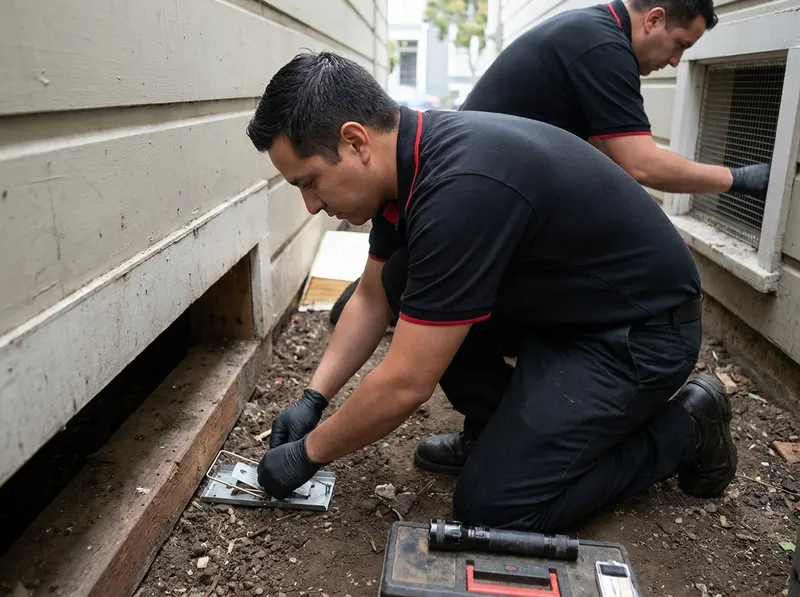
- What's included: a full interior and exterior rodent inspection, species identification (Norway rat vs. roof rat), snap-trap and monitoring station placement, entry-point mapping with photos, and a written sealing plan for the openings found.
- How fast: most San Francisco homes get an inspection appointment within a few business days, with trap placement done during that same visit when access allows.
- What it costs: rat work in San Francisco typically starts at a $250 minimum for inspection and initial trapping, with multi-visit programs and sealing work quoted in ranges below — exact price confirmed on-site.
- What we take: cash, major credit and debit cards, and standard electronic transfers; property managers can be invoiced with a documented service report for tenant files.
- How to book: call or text (628) 278-5478 with your address, building type, and where you're hearing or seeing activity, and you get an arrival window you can actually plan a work-from-home day around.
San Francisco has two rats and they behave nothing alike. **Norway rats** are ground-and-below animals — they come up through sewer laterals, burrow under garage slabs and retaining walls, and work the compost bins and chicken coops in the Excelsior and along the flatter blocks of Bayview-Hunters Point. **Roof rats** climb: they travel fence lines, Monterey pine and palm branches, and overhead utility lines, then enter through roof junctions and attic vents in Noe Valley, Glen Park and the leafier hillsides above Bernal Heights. Same droppings to an untrained eye, completely different treatment plan. Setting traps in an attic for a rat that lives under the front steps wastes two weeks, so the inspection comes first and the plan follows the species.
Building stock decides the rest. Outer Sunset and Inner Richmond homes sit over tuck-under garages with sand-set foundations, and the gaps around water lines, drain penetrations and the bottom of a warped garage door are wide enough for a rat to pass without touching the sides. Mission District Victorian and Edwardian flats share walls and light wells, which means the neighbor's untreated kitchen keeps re-seeding yours until the shared cavity is sealed. North Beach and Potrero Hill mixed-use blocks add commercial food waste on the ground floor and residential units above it — a vertical highway inside the walls. In a Bernal in-law unit, the fix is often one crawlspace hatch and two unscreened vents.
Decision fit: if you're hearing activity but haven't seen a rat, a single inspection visit with monitoring placement is usually the right first step, and it costs the least. If you have visible droppings, chewed packaging, or a rat that has already been seen in daylight, a **multi-visit trapping program** is the honest recommendation, because a population that is out foraging in the open is past the point where one trap set resolves it. The trade-off is real: trapping takes return visits and patience, while dropping poison bait is faster on paper. We lead with traps and exclusion because bait moves the rat somewhere it can die inside a wall cavity, and because anticoagulant rodenticide travels up the food chain to the red-tailed hawks and owls that hunt the edges of Golden Gate Park and Lake Merced. That is a tool of last resort in tamper-resistant exterior stations, never a first move, and never scattered loose in a crawlspace where a curious dog or toddler can reach it.
**Exclusion is the part that makes it stay fixed.** Sealing means hardware cloth over vents, door sweeps, sheet metal at gnawed wood edges, mortar and mesh at pipe penetrations — physical barriers, not foam alone, because rats chew through expanding foam in a weekend. We'll tell you which openings you can close yourself and which need us, in writing, whether or not you hire us for the sealing. If a landlord or property manager needs documentation before a tenant complaint escalates, the inspection report includes photos, entry points, and the sanitation and storage changes required on the tenant side. No 12-month contract is required to get a single inspection in San Francisco County — call (628) 278-5478 and start with the inspection.
Call (628) 278-5478Rat Control pricing in San Francisco
| Rat inspection with species ID, entry-point mapping and initial trap placement (single-family or flat) | $250 – $425 |
| Multi-visit trapping program, typically 3–4 return visits until activity stops | $450 – $950 |
| Crawlspace or attic trapping in larger / multi-unit San Francisco buildings | $650 – $1,400 |
| Entry-point sealing, small scope (garage door sweep, 2–4 vents or pipe penetrations) | $350 – $850 |
| Full exclusion, whole-structure (tuck-under garage, crawlspace hatch, roof junctions) | $900 – $3,500+ |
| Droppings and nesting-material cleanup with sanitizing after removal | $375 – $1,100 |
| Follow-up monitoring visit after a completed program | $250 – $350 |
Exact price confirmed free on-site before any work.
Rat Control — questions, answered
How much does rat control cost in San Francisco?
Rat control in San Francisco starts at a $250 minimum, which covers the inspection, species identification and initial trap placement. Multi-visit trapping programs generally run $450 to $950, and sealing work is quoted separately based on how many entry points the building actually has. These are ballparks — the exact price is confirmed on a free on-site visit, because a tuck-under garage in the Outer Sunset and a third-floor North Beach flat are not the same job.
Do you use rat poison in San Francisco homes?
Poison is not our default in San Francisco homes. Snap traps and exclusion do the work, because a poisoned rat can die inside a wall cavity and because anticoagulant bait poses a secondary-poisoning risk to the hawks, owls and coyotes living around Golden Gate Park, the Presidio and Lake Merced. When bait is genuinely warranted, it is placed only in tamper-resistant exterior stations, never loose where a child or pet can reach it, and you're told exactly what was used and where.
Why do rats keep coming back to my Mission District flat?
Rats keep returning to Mission District flats because Victorian and Edwardian buildings share walls, light wells and floor cavities with neighboring units, so treating one kitchen while an adjoining space stays open just resets the cycle. The fix is sealing the shared-cavity access points and the exterior openings on your own structure — hardware cloth, sheet metal and mortar rather than foam — so the population next door has no route in. That is why our reports always list entry points, not just trap counts.
Can you tell whether I have rats or mice in my San Francisco crawlspace?
Yes — species ID is part of every San Francisco rat inspection, and it changes the plan. Rat droppings are roughly the size of a coffee bean, rat rub marks along joists are heavier and greasier, and rat entry gaps are quarter-sized or bigger, while mice slip through openings the width of a pencil. Norway rats favor ground level and burrows under slabs and steps; roof rats favor attics and fence-line travel routes in areas like Glen Park and Noe Valley.
How long does a rat treatment take in a San Francisco building?
Most San Francisco rat programs run two to four weeks from first visit to no measurable activity, with return visits about a week apart to check and reset traps. Sealing is scheduled once the population is down, so nothing gets trapped inside the walls. Larger multi-unit and mixed-use buildings in Potrero Hill, Bayview-Hunters Point or SoMa can take longer when several tenant spaces and a commercial ground floor all need access — we tell you that up front rather than after the first invoice.